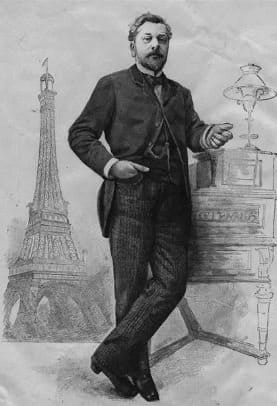
The Man Behind the Tower
Gustave Eiffel was born on December 15, 1832, in Dijon, France. He grew up in a family of engineers, which undoubtedly influenced his career choice. Eiffel pursued his education at the École Centrale des Arts et Manufactures, where he graduated as a civil engineer. His early career involved working on various railway projects, including the construction of bridges and viaducts, showcasing his aptitude for structural engineering.
One of his breakthrough projects was the design of the Garabit Viaduct in 1884, a massive iron structure that reflected Eiffel’s innovative approach to engineering. Through this project, he developed a reputation for embracing new materials, particularly wrought iron, which would later play a crucial role in the construction of the Eiffel Tower. Eiffel’s ability to blend functionality with aesthetic appeal laid the groundwork for his future endeavors.
Prior to embarking on the iconic Eiffel Tower project, Eiffel collaborated with various prominent figures in the engineering field. His relationship with the architect Stephen Sauvestre was particularly instrumental, as it enabled him to refine architectural details and improve the structural integrity of his designs. The combination of Eiffel’s engineering expertise and Sauvestre’s artistic vision culminated in a plan for a tower that would stand as a testament to engineering excellence.
Eiffel’s character, marked by determination and a commitment to innovation, shaped many of his professional relationships. He was known for his hands-on approach, often involving himself deeply in the details of his projects. This dedication not only garnered respect among his peers but also led to numerous successes that would forever alter the landscape of architecture and engineering.
Gustave Eiffel’s Role in the Statue of Liberty
The Statue of Liberty, a monumental symbol of freedom and democracy, owes much of its structural integrity to the engineering expertise of Gustave Eiffel. Commissioned to create the internal iron framework of the statue, Eiffel faced several engineering challenges that required innovative solutions. Constructed from copper sheeting, the statue needed a robust yet lightweight support system to withstand harsh weather conditions and the test of time.
Eiffel’s approach focused on using wrought iron as the primary material for the internal structure. One notable challenge was accommodating the statue’s unique shape and height while ensuring stability against wind loads. Eiffel devised a lightweight, airy frame composed of iron trusses, providing the necessary support while maintaining the aesthetic appeal of the statue. His framework not only supported the outer skin but also allowed for the necessary expansion and contraction due to temperature fluctuations, a vital consideration in architectural design.
What stands out in Eiffel’s contribution to the Statue of Liberty is his application of advanced metal construction techniques. His work exemplified the potential of iron as a structural element in large-scale sculptures, and the design principles he employed would later influence numerous other projects in architecture and engineering. The statue, which was dedicated in 1886, became a lasting symbol, embodying hope and freedom for millions. Eiffel’s skillful design played an integral role in transforming this monumental piece into a reality, showcasing how engineering and architecture can blend seamlessly to create an enduring legacy.
Wind Resistance and Skyscraper Design Innovations
Gustave Eiffel made significant contributions to the field of engineering, particularly in the realm of wind resistance calculations, which proved pivotal in the design and construction of skyscrapers. Recognizing the challenges posed by wind forces on tall structures, Eiffel developed advanced methodologies to assess and predict their impact. This research transformed not only how engineers approached tall building designs but also influenced the aesthetic elements involved.
During the late 19th and early 20th centuries, the emergence of skyscrapers marked a new frontier in architecture. Eiffel’s meticulous studies on wind action allowed for a more scientific approach towards skyscraper stability, particularly beneficial for buildings located in areas prone to strong winds. By integrating aerodynamic principles into structural design, Eiffel provided a framework for understanding how wind interacted with various forms and heights of buildings.
One notable example of his influence can be seen in the design of the New York skyscraper, the Flatiron Building. The triangular shape of the building was directly informed by Eiffel’s insights into minimizing wind resistance, thereby providing a more stable structure while enhancing its iconic visual appeal. Additionally, the use of steel skeleton framing in skyscrapers, further popularized by Eiffel’s work, enabled the creation of taller and lighter buildings capable of withstanding significant wind forces.
Modern skyscrapers continue to benefit from Eiffel’s foundational work in assessing wind loads. Current design practices often incorporate sophisticated wind tunnel testing and computational fluid dynamics, built upon the principles he pioneered. In essence, Eiffel’s groundbreaking contributions to wind resistance studies not only improved the safety and feasibility of skyscrapers but also left an indelible mark on the future of architectural engineering, setting standards that continue to be followed today.
Legacy of Gustave Eiffel in Modern Engineering
The engineering and architectural achievements of Gustave Eiffel resonate significantly in today’s world, affirming his legacy as a pioneer in structural innovation. His most notable creation, the Eiffel Tower, not only symbolizes Paris but also demonstrates the potential of iron as a primary material in construction. By challenging traditional methods and embracing wrought iron, Eiffel laid the groundwork for modern engineering practices that continue to inform construction techniques.
One of the remarkable aspects of Eiffel’s contributions is their relevance in contemporary architecture and engineering. His inventive use of prefabrication techniques allowed for faster construction times and reduced costs, principles that modern construction companies still follow today. The ideas he put forth regarding load distribution and structural integrity have paved the way for high-rise buildings and large-span bridges, which have become hallmarks of city skylines around the world. Engineers and architects recognize and study Eiffel’s methodologies as they are integrated into modern designs.
Furthermore, Eiffel’s influence extends beyond the technical aspects of engineering to the aesthetic considerations of civic architecture. His vision for integrating functionality with beauty encourages architects to create structures that are not only sound but also visually striking. Landmarks inspired by Eiffel’s work, such as the Tokyo Tower and the Blackpool Tower, reflect his enduring impact on architectural creativity. His work is often seen as a turning point where engineering and artistry merged, influencing generations of professionals in both fields.
In essence, Gustave Eiffel’s legacy in modern engineering and architecture remains robust and multifaceted. His innovative spirit continues to inspire engineers and architects, ensuring that his contributions are not only remembered but actively shape the future of construction worldwide. As we explore modern engineering practices, it is crucial to acknowledge Eiffel’s role in laying the foundation for the advancements we observe today.
NOTE: content crafted with advanced digital assistance