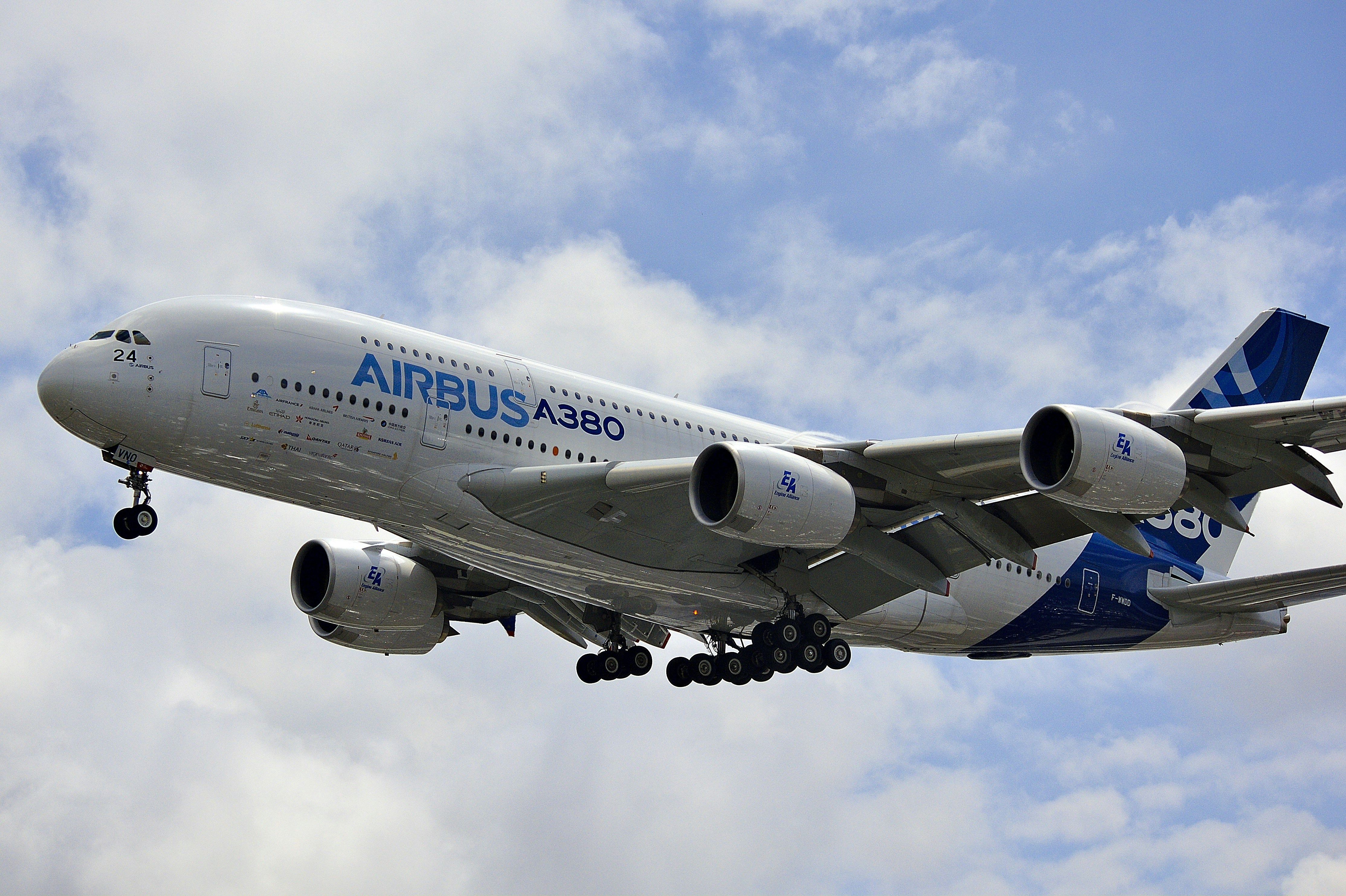
Introduction to the Airbus A380 Superjumbo
The Airbus A380, renowned as the world’s largest passenger airliner, marks a significant milestone in commercial aviation history. This double-deck, wide-body aircraft is the epitome of Airbus’s ambitions to revolutionize air travel by enhancing capacity and efficiency. With a typical seating arrangement accommodating over 555 passengers and a maximum capacity exceeding 800, the A380 was designed to meet the increasing demand for air travel, particularly on high-density routes.
One of the groundbreaking features of the A380 is its innovative design, including a spacious cabin that is significantly wider than its predecessors, allowing for greater comfort during long flights. The aircraft’s advanced aerodynamics and engine technology contribute to its fuel efficiency, aligning with the aerospace industry’s goals to reduce environmental impact while maintaining performance. As air travel continues to grow globally, the A380’s introduction aimed to cater to this demand by facilitating more passengers on fewer flights, thereby optimizing airline operations.
The Airbus A380 project was not merely about creating a larger airplane but about pushing the boundaries of engineering and design in aviation. With ambitious targets to capture a considerable share of the market, the A380 was envisioned to transform airport operations, enabling airlines to serve more passengers within the same infrastructure. The launch of such a remarkable aircraft was expected to significantly influence air travel patterns and stimulate economic growth in connected regions.
However, the journey from concept to completion was riddled with unprecedented challenges, including complexity in its wiring systems, the intricacies of systems integration, and coordination among various stakeholders. These challenges highlighted the need for rigorous testing and development processes, which will be further explored in subsequent sections.
The Complex Wiring System of the A380
The Airbus A380 features an exceptionally intricate wiring system, essential for the effective operation of various aircraft systems and components. Given the superjumbo’s unprecedented size and capacity, the wiring harnesses designed for the A380 have been crafted exclusively to cater to its operational needs. These custom-made wiring harnesses are crucial in providing electrical connections that handle everything from cockpit instruments to cabin amenities, contributing significantly to the overall functionality of the aircraft.
Integrating a wiring system of such magnitude comes with unique challenges. The A380 is equipped with approximately 500 kilometers of wiring, comprising thousands of individual wires. Each wire serves vital purposes, including power distribution, signal transmission, and operational commands for critical systems such as avionics, lighting, and flight controls. The complexity of this network necessitates rigorous planning and testing to ensure that all components work seamlessly together, thereby minimizing the potential for malfunctions that could compromise safety and reliability.
Moreover, the design phase of the wiring system involves considerable foresight. Engineers must navigate various constraints, including the need for redundancy, weight considerations, and resistance to electromagnetic interference. Effective integration of the wiring harnesses is of paramount importance; misalignment or faulty connections can result in cascading failures across interconnected systems. Thus, concerted effort is required to adhere to stringent regulatory standards while ensuring that the A380’s wiring system can withstand the rigors of flight. The continuous evolution of technology serves to enhance the design and fabrication of these wiring systems, improving both the performance and safety of the superjumbo aircraft.
Development Challenges: Incompatible Software Programs
One of the most significant challenges encountered during the development of the Airbus A380 was the application of two incompatible software programs across different facilities in Europe. The decision to utilize various software systems was initially motivated by the diverse expertise and existing capabilities at different Airbus locations. This led to the expectation that distinct teams could operate in parallel, thereby enhancing efficiency during the A380’s extensive development phase.
However, the use of disparate software platforms resulted in considerable miscommunication between the teams. Each facility utilized its own system to design wiring schematics, making it increasingly difficult to integrate all components seamlessly. Consequently, this lack of interoperability led to inconsistencies in the wiring design, complicating not only the assembly process but also introducing potential safety concerns. The initial optimism surrounding the development process quickly gave way to frustration as teams grappled with aligning their efforts amidst technical disparities.
This compatibility issue had far-reaching implications on project timelines and overall costs. Delays arose as teams were forced to spend additional time reconciling data discrepancies that stemmed from the use of incompatible software. Furthermore, project management faced challenges in aligning their schedules, leading to cascading delays that affected subsequent phases of the development. The difficulty in coordinating efforts through these technological barriers ultimately contributed to an increase in the overall project budget, straining resources and triggering reevaluation of initial plans.
In summary, the challenge posed by the deployment of incompatible software programs underscored the complexities inherent in managing large-scale aircraft development. This situation not only hampered efficient project execution but also highlighted the crucial need for consistency in technological frameworks to ensure the successful completion of multi-facility projects such as the Airbus A380.
Lessons Learned and Impact on Future Aircraft Development
The Airbus A380’s wiring challenges have provided critical insights that extend beyond the realm of this particular aircraft. The complexity of integrating numerous systems in superjumbo development has underscored the necessity for robust project management and meticulous planning. One of the primary lessons learned is the importance of effective communication and cross-team collaboration. The A380 program revealed that disparate teams often work in silos, leading to inconsistencies in wiring designs and other integral components. By fostering a culture of collaboration and shared objectives, future projects can mitigate the risk of similar issues arising.
Furthermore, the A380 experience has highlighted the significance of standardization in wiring and software interfaces. By establishing uniform practices and guidelines, manufacturers can streamline the integration process, ultimately improving efficiency and reducing errors. Standardization not only enhances compatibility across various components but also simplifies maintenance and troubleshooting procedures. This approach will be particularly vital as aircraft technology evolves, becoming increasingly complex and interconnected.
Moreover, Airbus and the broader aerospace industry must prioritize the implementation of comprehensive testing protocols throughout the design and production phases. Early and rigorous testing can identify potential wiring issues before they escalate, ensuring that the final product meets safety and performance standards. It is crucial that these testing methodologies evolve in tandem with technological advancements, incorporating modern techniques such as simulation and digital twin technology.
In conclusion, the wiring challenges faced during the A380’s development have imparted valuable lessons that can shape the future of aircraft manufacturing. By emphasizing collaboration, standardization, and rigorous testing, the aerospace industry can enhance its ability to develop complex aircraft systems, ultimately leading to safer and more innovative aviation solutions.
NOTE: content crafted with advanced digital assistance